Type and press Enter.

Free Next Day shipping on orders over £50*

Ritual Harvest

Ritual Harvest: Coffee, Community, and Celebration in Jaén, Peru

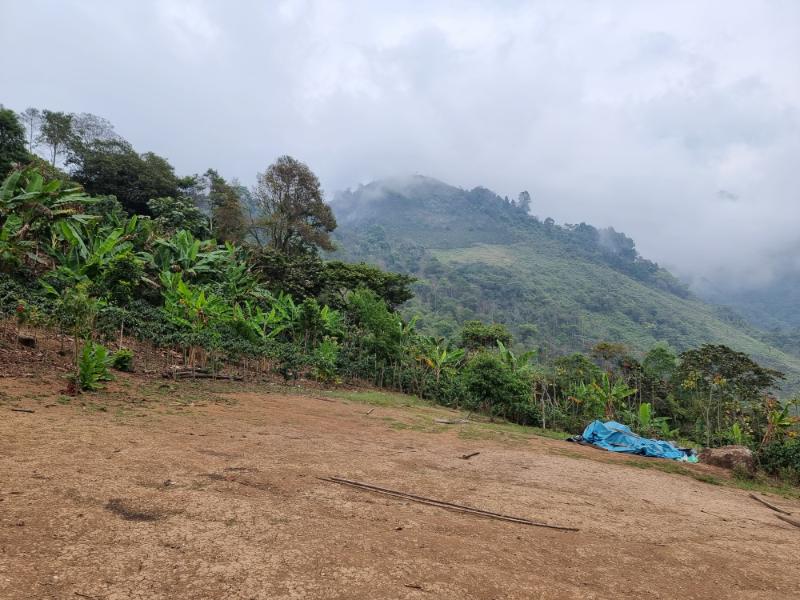
High in the uplands of Jaén, in northern Peru’s Cajamarca region, coffee is more than a crop — it is a rhythm that shapes daily life, seasons, and celebration. At 1,650 metres above sea level, La Naranja Farm sits quietly among forested hills, its orange trees and coffee plants sharing the same soil, rain, and mountain air. This is where Elvis Reynerio Tineo Rafael grows coffee rooted not only in altitude and technique, but in tradition.

La Naranja is a one-hectare, family-run farm established in 2016 on land gifted to Elvis by his family — a continuation of a lineage of coffee growers stretching back generations. The knowledge passed down from grandparents to parents now finds expression in Elvis’s work: careful cultivation, attention to soil health, and a commitment to improving quality year after year. Coffee here is personal. Every harvest carries a sense of responsibility — to the land, to family, and to the wider community.

A Landscape Shaped by Nature

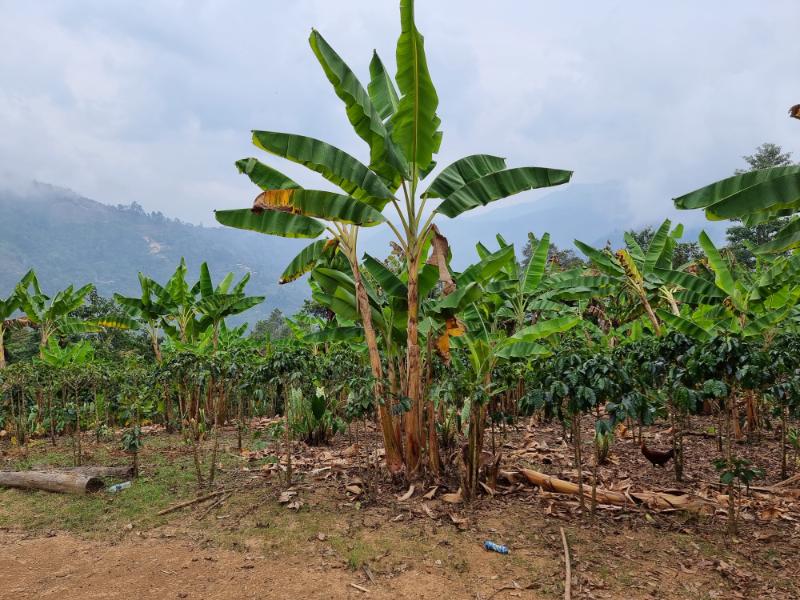
The farm’s high elevation and cool, humid microclimate create ideal conditions for coffee. Regular rainfall nourishes clay-loam soils with a balanced pH, while surrounding forest helps regulate temperature and moisture. La Naranja grows Caturra, Catimor, and Catuai, varieties well suited to the region and increasingly refined through careful processing.

Harvest runs from May to August, overlapping with one of the most important moments in the local calendar. Coffee cherries are hand-picked and processed using a fully washed method, with fermentation carried out in sealed bags — a sign of the region’s growing focus on precision, experimentation, and cup clarity. Annual production is modest, around 40 quintales, but quality is the clear priority.

Coffee and the Patronal Festival

In El Diamante, the high-altitude community where La Naranja is located, agriculture and culture are inseparable. Each year on 20 July, the community gathers for its patronal festival — a day marked by shared meals, music, and collective pride. It is a celebration of faith, land, and people, timed closely with the height of the coffee harvest.

This connection between harvest and celebration inspired the name Ritual Harvest. It reflects the idea that coffee here is not produced in isolation, but as part of a wider cultural rhythm. Picking, fermenting, drying — these are acts repeated year after year, shaped by tradition and reinforced by community. The festival is a reminder that coffee is both livelihood and legacy.

Farming with Purpose

Elvis leads a small team of four, using a balanced approach to farming that combines organic matter, mineral fertilisers, and recycled coffee by-products to maintain soil health. Like much of Cajamarca, La Naranja relies on rainfall rather than irrigation, making the farm vulnerable to climate variability, drought, and threats such as coffee leaf rust. Despite these challenges, Elvis remains focused on long-term sustainability — both environmental and economic.

His goal is simple but ambitious: to produce coffees that earn recognition for their quality and secure pricing that allows the farm to thrive for generations to come.

A Coffee That Tells a Story

Ritual Harvest is a reflection of place — high-altitude coffee shaped by mountain climate, family knowledge, and communal celebration. It represents the quiet dedication behind each cup and the cultural moments that give meaning to the work.

From the hills of Jaén to your brew bar, this coffee carries more than flavour. It carries a story of harvest, heritage, and the enduring bond between coffee and community.

Cold Brew vs Iced Coffee — What’s the Difference?

They’re both cold. They’re both caffeinated. But cold brew and iced coffee are not the same — and knowing the difference can help you choose the drink that suits your taste, lifestyle, and brew setup.

Let’s compare.

Iced Coffee: Hot Brew, Chilled Fast

How it’s made:
Iced coffee starts as regular hot coffee — brewed using drip, pour-over, or espresso — then cooled down by pouring over ice.

Taste profile:

  • Bright and crisp
  • Often more acidic
  • Can taste diluted if not brewed strong enough

Pros:

  • Quick to make
  • Familiar flavour
  • Great for adding milk or syrups

Best for:

  • Those who want a fast, refreshing coffee
  • Fans of traditional coffee flavour with a chill twist

Cold Brew: Slow Steep, Smooth Finish

How it’s made:
Cold brew is made by steeping coarse-ground coffee in cold water for 12–24 hours, then straining it. No heat involved.

Taste profile:

  • Smooth and mellow
  • Lower acidity
  • Naturally sweeter and stronger

Pros:

  • Higher caffeine content
  • Less bitterness
  • Stays fresh longer in the fridge

Best for:

  • Those who love bold, smooth coffee
  • People sensitive to acidity
  • Batch brewers who want coffee on tap

Cold Brew vs Iced Coffee — Quick Comparison

Got thoughts, questions, or coffee stories of your own? Leave a comment below — we read every one and love connecting with fellow coffee lovers.

For more about who we are and what makes Bold Coffee… well, bold, check out our About Us page.

And don’t forget to explore our other blog posts — we’re always adding new content.
Sign up to our newsletter and follow us on socials to stay updated. The world of coffee moves fast, and we’re here to keep you in the loop.

How to Find Your Perfect Bean

Finding your perfect coffee bean is like finding your signature scent — personal, expressive, and worth the journey. Whether you’re new to specialty coffee or refining your palate, this guide will help you decode flavour notes, understand origins, and choose beans that match your taste and brew style.

Step 1: Know Your Flavour Preferences

Coffee can taste like fruit, nuts, chocolate, spices, flowers, or even wine — depending on the bean and roast. Here’s a quick flavour map:

  • Fruity & floral → Ethiopian, Kenyan, light roast
  • Nutty & chocolatey → Brazilian, Colombian, medium roast
  • Earthy & spicy → Sumatran, Indian, dark roast

Tip: Read the tasting notes on the bag — they’re like a cheat sheet for flavour.

Step 2: Understand Origin Profiles

Where coffee is grown affects its flavour. Here’s a snapshot:

Region Typical Notes Acidity Body
Ethiopia Blueberry, jasmine High Light
Kenya Blackcurrant, citrus High Medium
Colombia Caramel, red fruit Medium Medium
Brazil Chocolate, nuts Low Full
Sumatra Earthy, herbal, spice Low Heavy

Tip: Try a few single-origin coffees to explore what you like.

Step 3: Choose Your Roast Level

Roast affects flavour, aroma, and body:

  • Light roast → Bright, acidic, complex
  • Medium roast → Balanced, sweet, versatile
  • Dark roast → Bold, smoky, low-acid

Tip: Match roast to your brew method — light for pour-over, dark for espresso.

Step 4: Match Bean to Brew Style

  • Pour-over / filter → Light to medium roast, fruity or floral notes
  • Espresso / moka pot → Medium to dark roast, chocolatey or nutty
  • French press / cold brew → Full-bodied beans, low acidity

Tip: Use scales and timers to dial in your brew — consistency is key.

Step 5: Experiment & Keep Notes

Try different beans, origins, and roasts. Keep a coffee journal with:

  • Bean name & origin
  • Roast level
  • Brew method
  • Taste notes & rating

Over time, you’ll build a flavour profile that’s uniquely yours.

Final Word

Got thoughts, questions, or coffee stories of your own? Leave a comment below — we read every one and love connecting with fellow coffee lovers.

For more about who we are and what makes Bold Coffee… well, bold, check out our About Us page.

And don’t forget to explore our other blog posts — we’re always adding new content.
Sign up to our newsletter and follow us on socials to stay updated. The world of coffee moves fast, and we’re here to keep you in the loop.
Pedro’s Farm: Sustainability, Struggle, and the Soul of Brazilian Coffee

How One Family’s Commitment to Ethical Farming Is Changing the Brew

In the rolling hills of Sul de Minas, Brazil, Pedro Gabarra and his sister Mariana run one of the region’s most sustainable coffee farms. Their beans — Mundo Novo variety, grown naturally at around 1,000 metres above sea level — are a testament to what coffee can be when it’s cultivated with care, not chemicals. But behind the flavour lies a story of resilience.

Brazil’s coffee industry has faced mounting challenges in recent years. Climate instability has brought unpredictable frosts, droughts, and heavy rains, all of which threaten yields and quality. Global market pressures have driven prices down, making it harder for small producers to survive — let alone invest in sustainability. Many farms have resorted to shortcuts: chemical fertilisers, mass harvesting, and low-grade exports. Pedro and Mariana chose a different path.

Their farm is more than a business — it’s a living system. They’ve committed to regenerative farming, biodiversity, and ethical labour practices. Shade-grown cultivation protects the soil. Natural processing avoids chemical interference. Careful drying and storage prevent mould and mycotoxins. Every step is deliberate, designed to protect the land and the people who work it.

The result is a coffee that reflects its environment: clean, complex, and deeply rooted in place. It’s not just better for the planet — it’s better in the cup. And it’s proof that sustainability isn’t a label; it’s a daily decision.

Bold Coffee is proud to support producers like Pedro and Mariana. We pay well above Fairtrade minimums, raise money for the Waterfall Foundation and World Coffee Research with every bag sold, and reject the shortcuts that dominate the industry. Because great coffee starts with great people — and they deserve more than just our praise.

Got thoughts, questions, or coffee stories of your own? Leave a comment below—we read every one and love connecting with fellow coffee lovers.

For more about who we are and what makes Bold Coffee… well, bold, check out our About Us page.

And don’t forget to explore our other blog posts—we’re always adding new content.
Sign up to our newsletter and follow us on socials to stay updated. The world of coffee moves fast, and we’re here to keep you in the loop.

£780 for a Cup of Coffee? Dubai’s Brewed Statement

In a city known for luxury, Julith Coffee in Dubai has taken things to a new level—serving a single cup of coffee for AED 3,600, or roughly £780. The brew in question? A 98-point Gesha varietal from Panama, auctioned for over £24,000 per kilo. It’s not just a drink; it’s a spectacle.

This isn’t your average café experience. The beans are hand-sorted, roasted with surgical precision, and brewed tableside using a customised siphon setup. The café claims the flavour profile includes “jasmine, bergamot, and a whisper of mango”—but at that price, you’d expect it to sing opera. It’s a flex, a headline, and a reminder that coffee is increasingly being treated as a luxury collectible.

But is it worth it? That depends on your priorities. For some, it’s about exclusivity and status. For others, it’s about flavour and story. At Bold Coffee, we believe great coffee should be extraordinary—but not inaccessible. We chase boldness, not bravado. Our beans are chosen for character, not clout, and our pricing reflects real value—not auction drama.

This Dubai moment also raises deeper questions: is ultra-premium coffee elevating the industry or distorting it? When price becomes the headline, flavour and ethics risk becoming footnotes. At Bold, we’re here to flip that script. We want coffee to be celebrated for its origin, its craft, and its impact—not just its price tag.

Got thoughts, questions, or coffee stories of your own? Leave a comment below—we read every one and love connecting with fellow coffee lovers.

For more about who we are and what makes Bold Coffee… well, bold, check out our About Us page.

And don’t forget to explore our other blog posts—we’re always adding new content.
Sign up to our newsletter and follow us on socials to stay updated. The world of coffee moves fast, and we’re here to keep you in the loop.
Lying Labels

Coffee Labelling Lies: What ‘Arabica’, ‘Fairtrade’, and ‘Organic’ Really Mean

Walk down any supermarket aisle and you’ll see coffee bags plastered with buzzwords: Arabica, Fairtrade, Organic, Single-Origin, Rainforest Alliance. They sound impressive — but what do they actually mean? And more importantly, do they mean anything at all?

This post cuts through the noise, exposing how labels are used to mislead consumers and inflate prices, while Bold Coffee keeps things honest.

Arabica: Not the Gold Standard You Think

Arabica beans account for around 60–70% of global coffee production, and they’re often marketed as superior to Robusta. But here’s the catch:

  • Arabica is a species, not a quality grade.
  • It includes everything from high-altitude, hand-picked beans to mass-produced, chemically treated crops.
  • Low-grade Arabica can taste worse than high-grade Robusta, especially when poorly roasted or stored.

Many brands use “100% Arabica” as a selling point, but it’s meaningless without context. It’s like saying “100% beef” — it could be prime steak or processed filler.

Fairtrade: Ethical in Theory, Flawed in Practice

Fairtrade certification was created to protect farmers from exploitation by guaranteeing a minimum price and a small premium for community development. But the reality is more complicated — and often disappointing.

  • Fairtrade’s minimum price for Arabica is currently $1.80 per pound, with a $0.20 premium.
  • This price hasn’t kept pace with inflation or rising production costs, especially in regions hit by climate change or currency instability.
  • Certification is expensive, and many smallholders can’t afford to join.
  • Large corporations can meet minimum standards while blending certified and non-certified beans, diluting the impact.

In short, Fairtrade offers a safety net — but not a solution.

Bold Coffee goes further. We pay well above Fairtrade minimums, often exceeding $2.50–$3.00 per pound, depending on quality and origin. That’s not a marketing claim — it’s a commitment to real, traceable impact. We work with partners who prioritise farmer welfare, environmental sustainability, and long-term relationships — not just box-ticking.

This approach ensures:

  • Better wages for growers
  • Higher quality beans for you
  • A supply chain built on trust, not bureaucracy

We don’t need a label to prove our ethics — we let our sourcing and roasting speak for themselves.

Organic: Cleaner Beans or Clever Branding?

Organic coffee is defined by how it’s grown: without synthetic fertilisers, pesticides, or herbicides. But the certification process doesn’t always account for the long-term chemical history of the soil. If a farm used synthetic inputs in the past, residues can linger — especially in poorly managed or compacted soil.

Here’s what’s important to know:

  • Organic certification typically requires a transition period (often three years) during which no synthetic chemicals are used. After this, the land can be certified organic.
  • However, residual contamination from previous farming — such as heavy metals, persistent pesticides, or herbicide residues — may remain in the soil.
  • Certification bodies do not routinely test soil for legacy contamination. They focus on current inputs and farming methods.
  • This means some “organic” coffee may be grown in soil that still carries traces of past chemical use.

Why Bold Coffee Doesn’t Play the Labelling Game

We believe in substance over slogans. That means:

  • No misleading labels — just clear information about how our coffee is grown, roasted, and tested.
  • No shortcuts — we roast in small batches, avoid instant formats, and publish our standards.
  • No greenwashing — we don’t slap on certifications for marketing. We earn trust through action.

Final Word

Coffee labels are designed to sell, not to inform. Bold Coffee is here to change that — with truth, transparency, and taste that speaks for itself.

Got thoughts, questions, or coffee stories of your own? Leave a comment below—we read every one and love connecting with fellow coffee lovers.

For more about who we are and what makes Bold Coffee… well, bold, check out our About Us page.

And don’t forget to explore our other blog posts—we’re always adding new content.
Sign up to our newsletter and follow us on socials to stay updated. The world of coffee moves fast, and we’re here to keep you in the loop.

Let me know when you’re ready to brew up the next post—I’ve got ideas that’ll stir the pot in all the right ways.

Mould in Your Mug: The Dirty Secret of Instant Coffee

The Truth They Don’t Tell You

You won’t see it. You won’t taste it. But in many instant coffees, it’s there: invisible mould toxins, known as mycotoxins, quietly hitching a ride from bean to brew.

These toxins — like ochratoxin A and aflatoxin — are produced by mold that grows on coffee beans during harvesting, drying, or storage. Even after roasting and processing, they can survive. And yes, instant coffee is especially vulnerable, thanks to mass production shortcuts and long shelf lives.

You’ve probably heard whispers — “coffee is full of mold,” “instant is the worst.” But here’s the reality: mycotoxins, toxic compounds produced by mold, are a real and measurable risk in coffee. These toxins, like ochratoxin A and aflatoxin, are linked to kidney damage, immune suppression, and even cancer when consumed in high amounts over time.

Coffee beans are especially vulnerable during:

  • Harvesting and drying, where moisture can linger.
  • Storage, especially in humid warehouses.
  • Mass production, where quality control is often sacrificed for speed.

And while roasting reduces some mould, mycotoxins can survive the heat. That means even your “premium” instant coffee could be carrying invisible baggage.

Big Brands, Bigger Blind Spots

Let’s talk names.
Nescafé. Starbucks VIA. Maxwell House.
These giants dominate the instant coffee aisle — but none of them publicly disclose their mycotoxin testing protocols. That’s not illegal, but it’s not bold either.

Some “clean coffee” brands claim to be mould-free, but their testing is often internal, unverified, or vague. Meanwhile, the industry standard allows trace amounts of mycotoxins — meaning your morning pick-me-up might come with a side of invisible risk.

  • 95% of the world’s coffee is grown for mass production, often in conditions ripe for mold growth.
  • “Clean coffee” brands like Bulletproof and Kion charge premium prices for “mold-free” claims — but many rely on internal testing, not third-party verification.
  • Amazon’s cheapest instant coffee was found to contain detectable levels of mold toxins in one test.

The kicker? There’s no legal requirement to test for mycotoxins in coffee. So unless a brand chooses transparency, you’re sipping blind.

Bold Coffee’s Stand: No Mold. No Compromise.

At Bold Coffee, we don’t play the invisible game. Here’s how we keep our beans clean:

  • Sourcing smart: We work with growers who dry beans properly and store them in low-humidity environments.
  • Roasting right: Our process minimizes residual toxins without sacrificing flavour.
  • No instant shortcuts: We don’t do instant coffee. We do instant impact — with beans that earn your trust.

How You Can Avoid Mould in Your Coffee

Want to keep your brew bold and clean? Here’s how:

  • Choose whole bean or ground coffee over instant — it’s less processed and easier to trace.
  • Store it right: Keep your coffee in a cool, dry place with an airtight seal.
  • Skip the mystery jars: If a brand won’t tell you where their beans come from or how they’re tested… ask why.

Final Sip

Coffee should energize you — not expose you to hidden toxins.
Bold Coffee isn’t just a brand. It’s a promise: no mould, no mystery, just truth in every cup.

So next time you reach for a brew, ask yourself:
Is it bold enough to be clean?

Got thoughts, questions, or coffee stories of your own? Leave a comment below—we read every one and love connecting with fellow coffee lovers.

For more about who we are and what makes Bold Coffee… well, bold, check out our About Us page.

And don’t forget to explore our other blog posts—we’re always adding new content.
Sign up to our newsletter and follow us on socials to stay updated. The world of coffee moves fast, and we’re here to keep you in the loop.